

What is the best way to cook a steak?
We went into this test convinced reverse sear would win. It didn't. At least, not the way we expected.
Let's get one thing straight before we start. We are not scientists. This is not a lab, we don't have a control group, and our margin of error is probably enormous. We didn't even stay in a Holiday Inn Express last night. But we do have grills, ovens, a genuine curiosity, and we've cooked 10,000+ steaks while representing some of the most premium steak companies in the world. So we set out to test reverse sear versus forward sear as rigorously as two guys with a meat thermometer possibly can.
For this test we used zabuton steaks, also known as Denver steaks, which come from the chuck primal. We love this cut for testing because it hits a sweet spot: enough internal fat that it actually needs rendering, but also enough fat on the outside to develop a real sear. It’s the closest thing to an ideal testing steak we could think of.
HOW WE TESTED
To keep things as fair as possible, we used two consecutive steaks cut from the exact same piece of chuck. Same animal. Same spot. We let both sit out at room temperature for an hour before starting.
Reverse sear: We started the steak low and slow in a 225°F oven until it hit an internal temperature of 125°F. Then we pulled it, let it rest for 15 minutes, and finished it with a hard sear in a hot pan.
Forward sear: We did the opposite. We started with a hard sear in a hot pan, let the steak rest for 15 minutes, and then finished it low and slow in a 225°F oven to bring it up to temperature.
Then we cut them open, tasted them side by side, and picked our favorites independently.
THE RESULTS
Here's what we found.
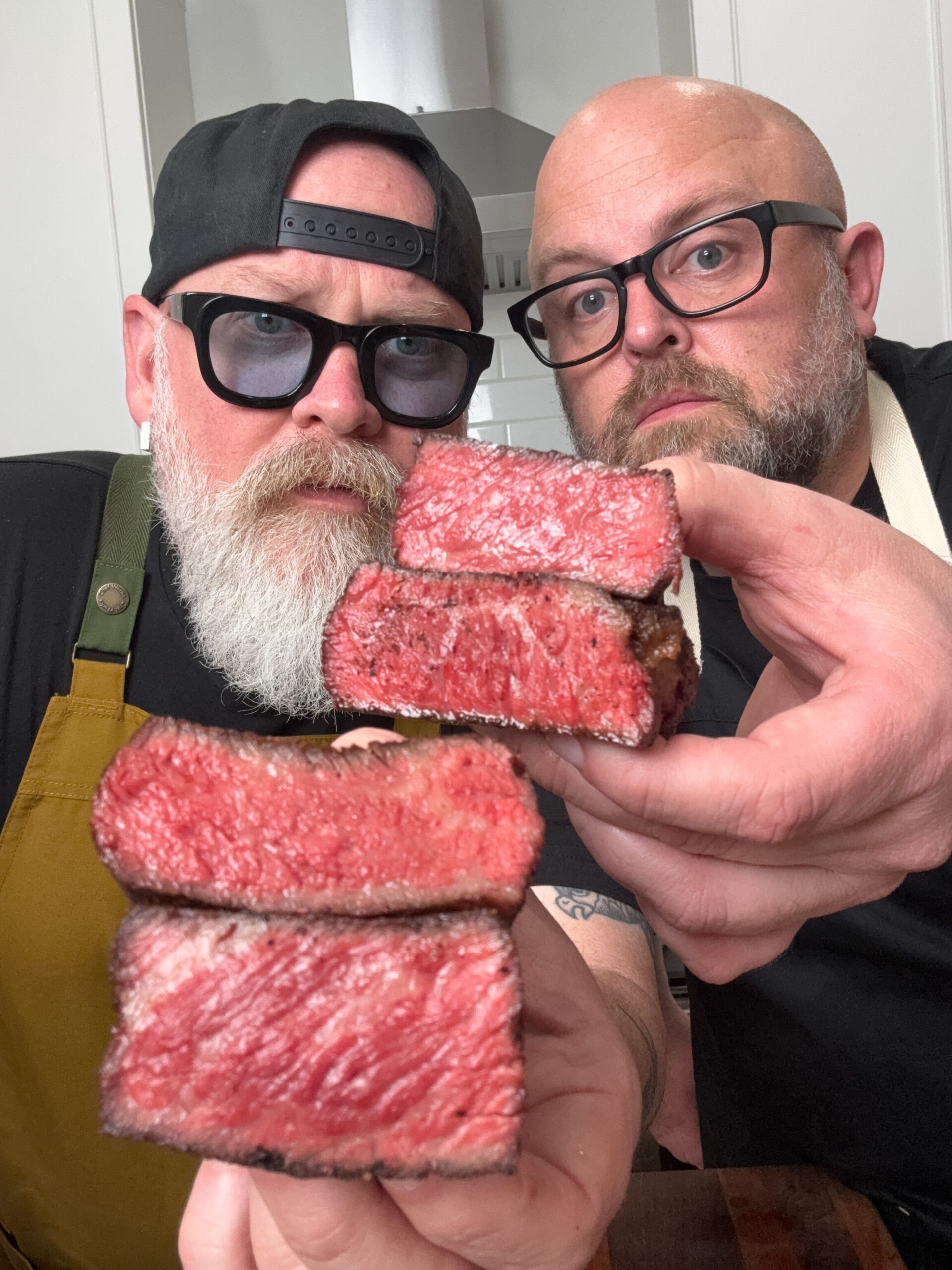
Visually, the reverse sear won, hands down. It developed a deeper, more consistent crust from edge to edge. Crust equals flavor.
Our theory on why: with the forward sear, there's still surface moisture on the steak when it goes into the pan. That moisture turns to steam, and steam is the enemy of a good crust. With the reverse sear, that low and slow trip through the oven dries out the surface before the steak ever hits the pan, which gave us a cleaner, more consistent sear.
But looks were not the full story.
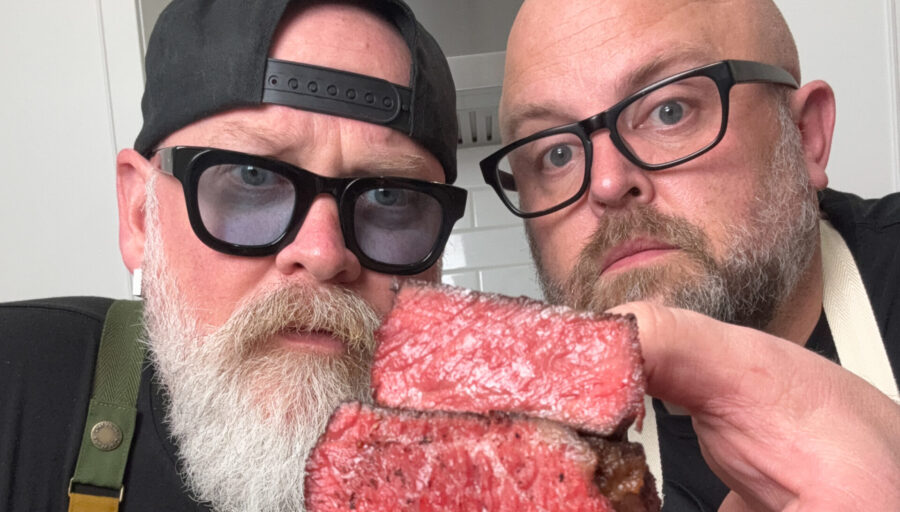
When we cut into the steaks, both had great color throughout. The forward sear also seemed to render the fat a little better.
Then came the taste test, and this is where it got interesting.
The reverse sear had more pronounced sear flavor and a slightly firmer, more steakhouse-style texture. The forward sear, despite having a less dramatic crust, was noticeably more tender, and the intramuscular fat was more rendered. Almost Wagyu-like in terms of mouthfeel.
When we each pointed to our favorite, independently, we both landed on the forward sear.
The Scorecard
Best crust: Reverse sear
Best sear flavor: Reverse sear
Best fat rendering: Forward sear
Most tender: Forward sear
Our winner: Forward sear
One important caveat: these were the results of this test, with these Denver steaks. Different cuts, different thicknesses, and different cooking setups can absolutely change the equation.
So, Which Method Should You Use?
Honestly, both of these methods are fantastic.
This wasn't a case where one steak was great and the other was disappointing. They were different levels of great. We fully endorse both methods, and we'll continue using both depending on what we're cooking and what we're trying to accomplish.
Choose reverse sear if: A deep, even crust and big seared-steak flavor are what matter most to you.
Choose forward sear if: Tenderness and fat rendering are your priorities.
But there's another reason we frequently choose reverse sear even though forward sear won this particular test: logistics.
When Reverse Sear Is Actually the Better Choice
If we're entertaining, reverse sear is hard to beat.
You can do the low and slow part ahead of time, pull the steaks, and let them rest while you deal with everything else that comes with having people over. You're not trying to time the entire meal around a piece of meat.
Then, when everybody is ready to eat, all that's left is the fun part: sear, slice, serve.
And because the steak has already had its rest, you're not standing around staring at a beautiful steak for another 10 or 15 minutes while everybody asks when dinner is ready.
For a dinner party, that alone can be enough for us to choose reverse sear.
Forward sear, on the other hand, is something we'd reach for when we're cooking a couple of steaks and our biggest priorities are tenderness and getting that fat beautifully rendered.
That's really the takeaway from this test. There isn't one "correct" way to cook a steak. There's a best method for the result you're after and the situation you're cooking in.
Why Trust Us on Steak?
We've cooked a frankly unreasonable number of steaks over the years, which means we've graduated from the school of hard knocks. We've tried just about every technique imaginable, and learned a lot along the way about what actually works.
We're also the go-to grillers for shows like the Today Show and The Drew Barrymore Show, where we've been asked to show a national audience how to cook a great steak. We've represented, as ambassadors, some of the most famous and well-respected steaks on the planet.
And then there's the book. Our bestselling cookbook is decidedly steak-forward. It became a #1 seller on Amazon and was named one of Barnes & Noble's Top Five Outdoor Cooking Books of the Year two years in a row.
So, yeah, we do steak.
That doesn't mean we think we already know everything. It's actually why we keep doing tests like this one. We went into this convinced reverse sear was going to win, and forward sear surprised the hell out of us.
Watch us show you how to cook a reverse sear steak on Today Show or check out the full steak test video here:
Let's get one thing straight before we start. We are not scientists. This is not a lab, we don't have a control group, and our margin of error is probably enormous. We didn't even stay in a Holiday Inn Express last night. But we do have grills, ovens, a genuine curiosity, and we've cooked 10,000+ steaks while representing some of the most premium steak companies in the world. So we set out to test reverse sear versus forward sear as rigorously as two guys with a meat thermometer possibly can.
For this test we used zabuton steaks, also known as Denver steaks, which come from the chuck primal. We love this cut for testing because it hits a sweet spot: enough internal fat that it actually needs rendering, but also enough fat on the outside to develop a real sear. It’s the closest thing to an ideal testing steak we could think of.
HOW WE TESTED
To keep things as fair as possible, we used two consecutive steaks cut from the exact same piece of chuck. Same animal. Same spot. We let both sit out at room temperature for an hour before starting.
Reverse sear: We started the steak low and slow in a 225°F oven until it hit an internal temperature of 125°F. Then we pulled it, let it rest for 15 minutes, and finished it with a hard sear in a hot pan.
Forward sear: We did the opposite. We started with a hard sear in a hot pan, let the steak rest for 15 minutes, and then finished it low and slow in a 225°F oven to bring it up to temperature.
Then we cut them open, tasted them side by side, and picked our favorites independently.
THE RESULTS
Here's what we found.
Visually, the reverse sear won, hands down. It developed a deeper, more consistent crust from edge to edge. Crust equals flavor.
Our theory on why: with the forward sear, there's still surface moisture on the steak when it goes into the pan. That moisture turns to steam, and steam is the enemy of a good crust. With the reverse sear, that low and slow trip through the oven dries out the surface before the steak ever hits the pan, which gave us a cleaner, more consistent sear.
But looks were not the full story.
When we cut into the steaks, both had great color throughout. The forward sear also seemed to render the fat a little better.
Then came the taste test, and this is where it got interesting.
The reverse sear had more pronounced sear flavor and a slightly firmer, more steakhouse-style texture. The forward sear, despite having a less dramatic crust, was noticeably more tender, and the intramuscular fat was more rendered. Almost Wagyu-like in terms of mouthfeel.
When we each pointed to our favorite, independently, we both landed on the forward sear.
The Scorecard
Best crust: Reverse sear
Best sear flavor: Reverse sear
Best fat rendering: Forward sear
Most tender: Forward sear
Our winner: Forward sear
One important caveat: these were the results of this test, with these Denver steaks. Different cuts, different thicknesses, and different cooking setups can absolutely change the equation.
So, Which Method Should You Use?
Honestly, both of these methods are fantastic.
This wasn't a case where one steak was great and the other was disappointing. They were different levels of great. We fully endorse both methods, and we'll continue using both depending on what we're cooking and what we're trying to accomplish.
Choose reverse sear if: A deep, even crust and big seared-steak flavor are what matter most to you.
Choose forward sear if: Tenderness and fat rendering are your priorities.
But there's another reason we frequently choose reverse sear even though forward sear won this particular test: logistics.
When Reverse Sear Is Actually the Better Choice
If we're entertaining, reverse sear is hard to beat.
You can do the low and slow part ahead of time, pull the steaks, and let them rest while you deal with everything else that comes with having people over. You're not trying to time the entire meal around a piece of meat.
Then, when everybody is ready to eat, all that's left is the fun part: sear, slice, serve.
And because the steak has already had its rest, you're not standing around staring at a beautiful steak for another 10 or 15 minutes while everybody asks when dinner is ready.
For a dinner party, that alone can be enough for us to choose reverse sear.
Forward sear, on the other hand, is something we'd reach for when we're cooking a couple of steaks and our biggest priorities are tenderness and getting that fat beautifully rendered.
That's really the takeaway from this test. There isn't one "correct" way to cook a steak. There's a best method for the result you're after and the situation you're cooking in.
Why Trust Us on Steak?
We've cooked a frankly unreasonable number of steaks over the years, which means we've graduated from the school of hard knocks. We've tried just about every technique imaginable, and learned a lot along the way about what actually works.
We're also the go-to grillers for shows like the Today Show and The Drew Barrymore Show, where we've been asked to show a national audience how to cook a great steak. We've represented, as ambassadors, some of the most famous and well-respected steaks on the planet.
And then there's the book. Our bestselling cookbook is decidedly steak-forward. It became a #1 seller on Amazon and was named one of Barnes & Noble's Top Five Outdoor Cooking Books of the Year two years in a row.
So, yeah, we do steak.
That doesn't mean we think we already know everything. It's actually why we keep doing tests like this one. We went into this convinced reverse sear was going to win, and forward sear surprised the hell out of us.
Watch us show you how to cook a reverse sear steak on Today Show or check out the full steak test video here: